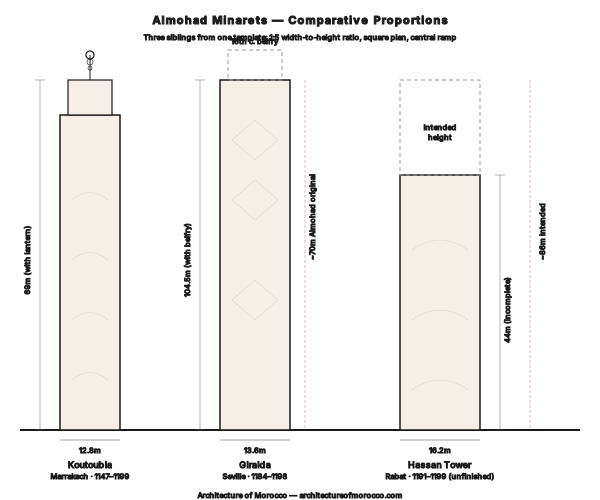
For eight hundred years, Morocco and Islamic Spain were not neighbours. They were the same civilisation. The Almoravids ruled from Marrakech to Saragossa. The Almohads governed from Rabat to Seville. The Koutoubia Mosque in Marrakech and the Giralda in Seville are siblings — same proportions, same dynasty, built within decades of each other.
When the Reconquista ended that shared world in 1492, the consequences flowed south. An estimated two million Muslims and Jews crossed the Strait of Gibraltar to Morocco over the following century. They were not ordinary refugees. They were architects, musicians, scholars, physicians, and master artisans carrying the accumulated knowledge of the most refined civilisation in medieval Europe.
They did not assimilate quietly. They rebuilt. Entire quarters of Fes, Tetouan, Rabat, and Chefchaouen were constructed in Andalusian style. A musical tradition that had vanished from Spain survived intact in Moroccan concert halls. Dishes that disappeared from Spanish kitchens continued to be cooked in Moroccan homes. The Andalusian refugees did not preserve a memory — they continued a living culture.
711 Tariq ibn Ziyad crosses from Morocco to Iberia
1492 Fall of Granada — end of Al-Andalus
~2M Refugees to Morocco over 150 years
1609 Final Morisco expulsion from Spain